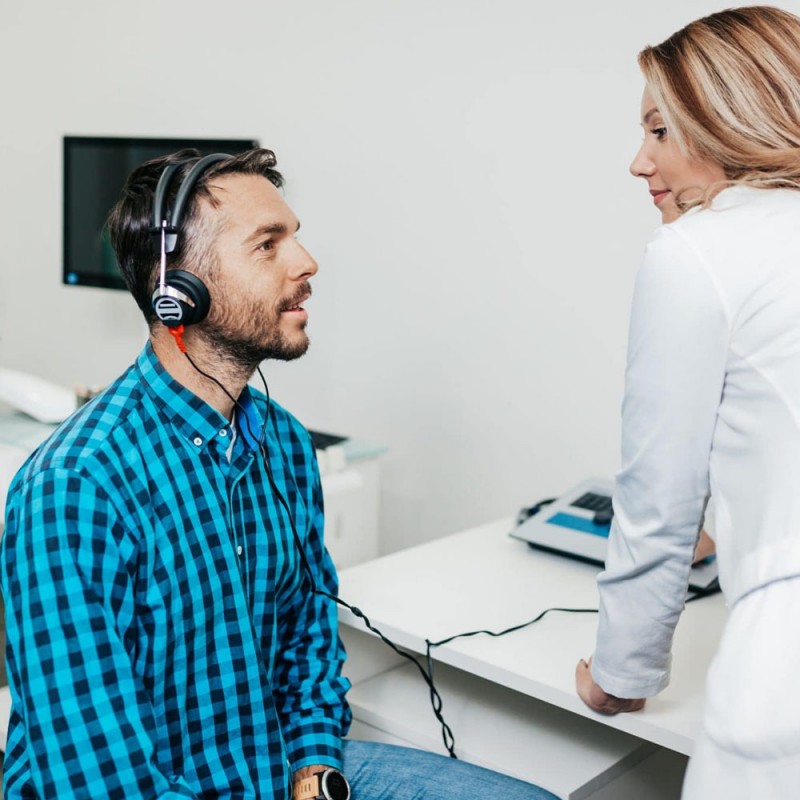
An Audiometry Test is a diagnostic test used to measure an individual's hearing ability and detect hearing impairments. At Jay Ganesh Industrial Medical Services, we offer comprehensive Audiometry Tests to assess the auditory health of your employees. This test is especially important for employees working in noisy environments, where prolonged exposure to high noise levels can lead to hearing damage or loss. Regular audiometric testing ensures that hearing impairments are detected early, preventing long-term damage and helping to maintain a safe and productive work environment.
What is an Audiometry Test?
An Audiometry Test is a hearing test that evaluates an individual's ability to hear sounds at various frequencies and volumes. The test involves listening to a series of tones at different pitches and intensities through headphones, and the person being tested signals when they hear a sound. The results are plotted on a graph called an audiogram, which illustrates the person's hearing threshold at each frequency. Audiometry tests are typically performed by trained audiologists or healthcare professionals to determine whether an employee has hearing loss or other auditory issues.
How Does an Audiometry Test Work?
During an Audiometry Test, the individual is asked to wear headphones while seated in a soundproof booth or a quiet room. Different sounds (tones and beeps) are played through the headphones at various pitches and volumes. The person being tested is asked to respond (typically by pressing a button or raising a hand) whenever they hear a sound. The test measures the quietest sound that can be heard at each frequency and plots this data on an audiogram.
The key aspects of the test include:
- Air Conduction Testing: Sounds are transmitted through the air via the headphones, measuring the overall hearing ability.
- Bone Conduction Testing: A small device is placed on the bone behind the ear to measure how sound vibrations are transmitted directly to the inner ear, bypassing the outer and middle ear. This helps identify whether hearing loss is caused by problems in the outer or middle ear or the inner ear.
Types of Audiometry Tests We Offer:
-
Pure Tone Audiometry (PTA):
- Purpose: This is the most common type of hearing test. It involves the presentation of pure tones (beeps) at various frequencies and volumes to assess the hearing threshold.
- What It Checks For: PTA evaluates the ability to hear sounds across a range of pitches and helps identify the degree and type of hearing loss (sensorineural, conductive, or mixed).
-
Speech Audiometry:
- Purpose: This test evaluates how well an individual can understand speech at different volumes.
- What It Checks For: Speech audiometry tests help determine the clarity of speech recognition and are particularly useful for diagnosing hearing loss that affects speech understanding. The test involves listening to recorded words or sentences at different sound levels and requires the person being tested to repeat or identify the words they hear.
-
Tympanometry:
- Purpose: While not strictly part of audiometry, tympanometry is often used alongside it to assess the middle ear's function by measuring the movement of the eardrum in response to changes in air pressure.
- What It Checks For: Tympanometry helps diagnose conditions such as fluid in the middle ear, ear infections, or eustachian tube dysfunction, which can affect hearing. It provides additional information about the health of the middle ear.
-
Otoacoustic Emissions (OAE):
- Purpose: OAE testing measures the sound waves produced by the inner ear (cochlea) in response to sound stimulation.
- What It Checks For: This test is primarily used to detect inner ear (cochlear) damage, particularly in newborns, infants, or those who cannot actively participate in a traditional audiometry test. It helps identify hearing loss at an early stage.
Why Audiometry Tests are Important for Occupational Health:
-
Preventing Noise-Induced Hearing Loss (NIHL): Employees working in industries such as manufacturing, construction, mining, and transportation are often exposed to high levels of noise. Prolonged exposure to loud sounds can lead to permanent hearing damage. Audiometry testing helps monitor employees’ hearing health over time, allowing early detection of hearing loss due to occupational noise exposure.
-
Regulatory Compliance: Many industries, especially those with high noise levels, are required by regulatory bodies (such as OSHA in the U.S. or similar organizations in other countries) to conduct regular audiometric testing for employees. Regular hearing tests help ensure compliance with safety regulations and protect employees from preventable hearing damage.
-
Early Detection of Hearing Loss: Audiometry tests are essential for detecting hearing loss at an early stage before it becomes severe and affects an employee’s quality of life or ability to perform their job. Early detection allows for the implementation of protective measures, such as hearing protection devices (earplugs or earmuffs) and modifications to the work environment.
-
Monitoring Hearing Health Over Time: For employees in noisy workplaces, regular audiometry testing is crucial to monitor hearing changes over time. It provides baseline hearing data, which can be compared with future tests to assess the progression of hearing loss and ensure timely intervention.
-
Protecting Employee Wellness: Hearing loss can impact communication, safety, and overall well-being. Detecting hearing impairments early allows for interventions, such as hearing aids or noise control measures, to be implemented, ensuring employees maintain their ability to perform their job safely and effectively.
-
Employee Retention and Productivity: Healthy hearing is essential for employee productivity, especially in jobs that require communication or alertness to environmental sounds (e.g., machinery noises, alarms). Regular hearing tests help preserve the ability of workers to perform their tasks efficiently and safely, leading to better job satisfaction, fewer workplace accidents, and reduced absenteeism.
Common Conditions Detected by Audiometry Testing:
-
Noise-Induced Hearing Loss (NIHL): Caused by prolonged exposure to loud noise, typically affecting high-frequency sounds first. Audiometry can detect the early stages of hearing loss due to workplace noise.
-
Age-Related Hearing Loss (Presbycusis): Hearing loss that gradually occurs with age. Audiometry helps determine the degree and nature of age-related hearing decline.
-
Tinnitus: A condition characterized by ringing, buzzing, or other sounds in the ears. Audiometry may help assess hearing function in individuals experiencing these symptoms.
-
Ear Infections and Fluid Buildup: Conditions affecting the middle ear, such as ear infections or fluid buildup, can impact hearing. Audiometry helps identify conductive hearing loss caused by these conditions.
-
Meniere’s Disease: A disorder of the inner ear that can lead to hearing loss, tinnitus, and dizziness. Audiometry can assist in diagnosing the condition and monitoring hearing function.
At Jay Ganesh Industrial Medical Services, we provide comprehensive Audiometry Tests to assess the hearing health of your employees and prevent the risk of hearing loss due to workplace noise exposure. Regular audiometric testing is crucial for maintaining employee well-being, ensuring compliance with safety regulations, and promoting a safe and productive working environment.
Contact us today to schedule an audiometry test or learn more about how we can help preserve the hearing health of your workforce!